

Title: Many Paths, One Home
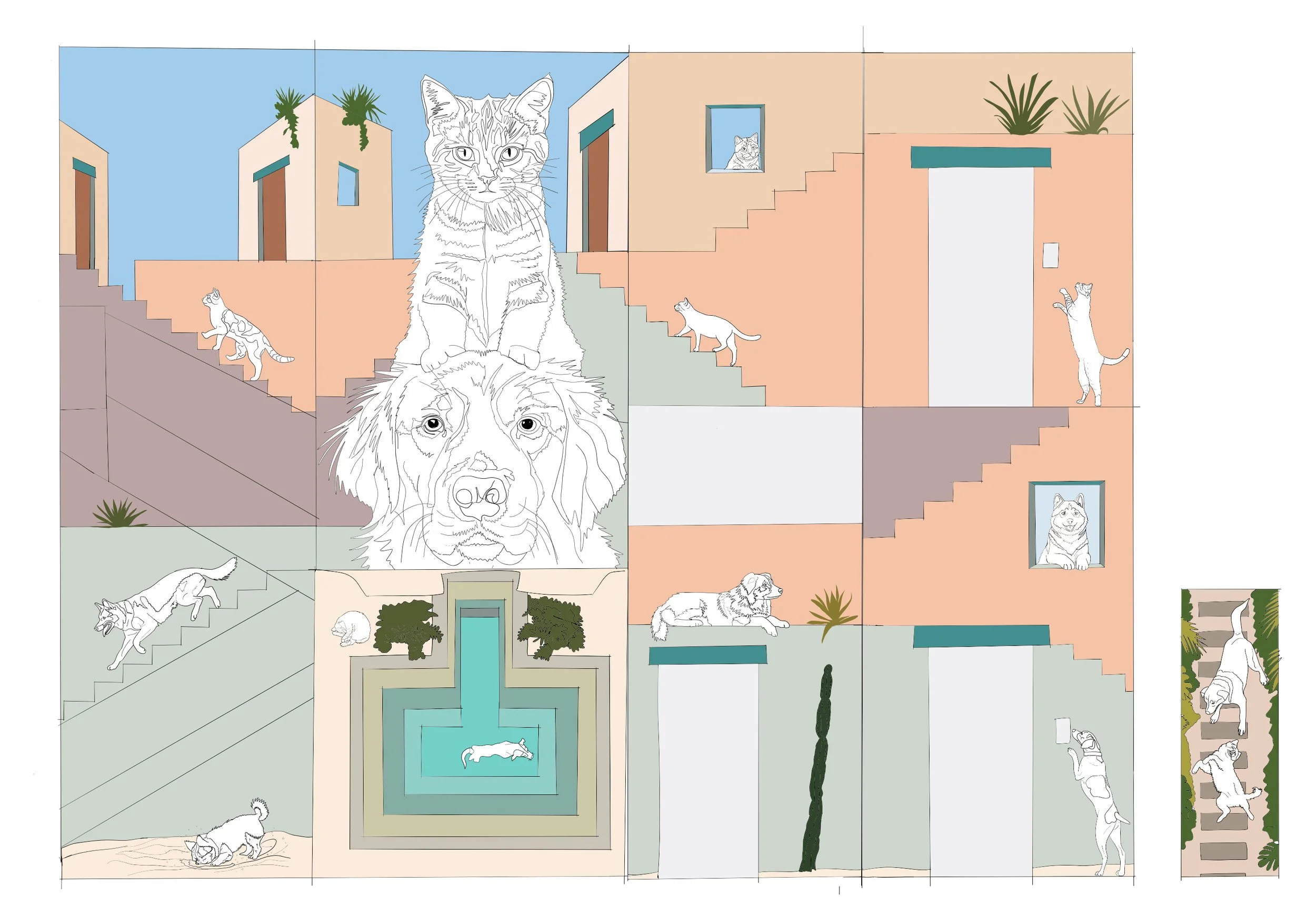
This mural proposal transforms the Orange County Animal Services facility into a warm, imaginative environment that celebrates compassion, movement, and belonging. Inspired by the architecture of the building itself, the composition is structured as a series of interconnected planes, stairways, and terraces—echoing the real circulation of the two-story facility while symbolizing the many journeys animals take on their way to finding a permanent home.
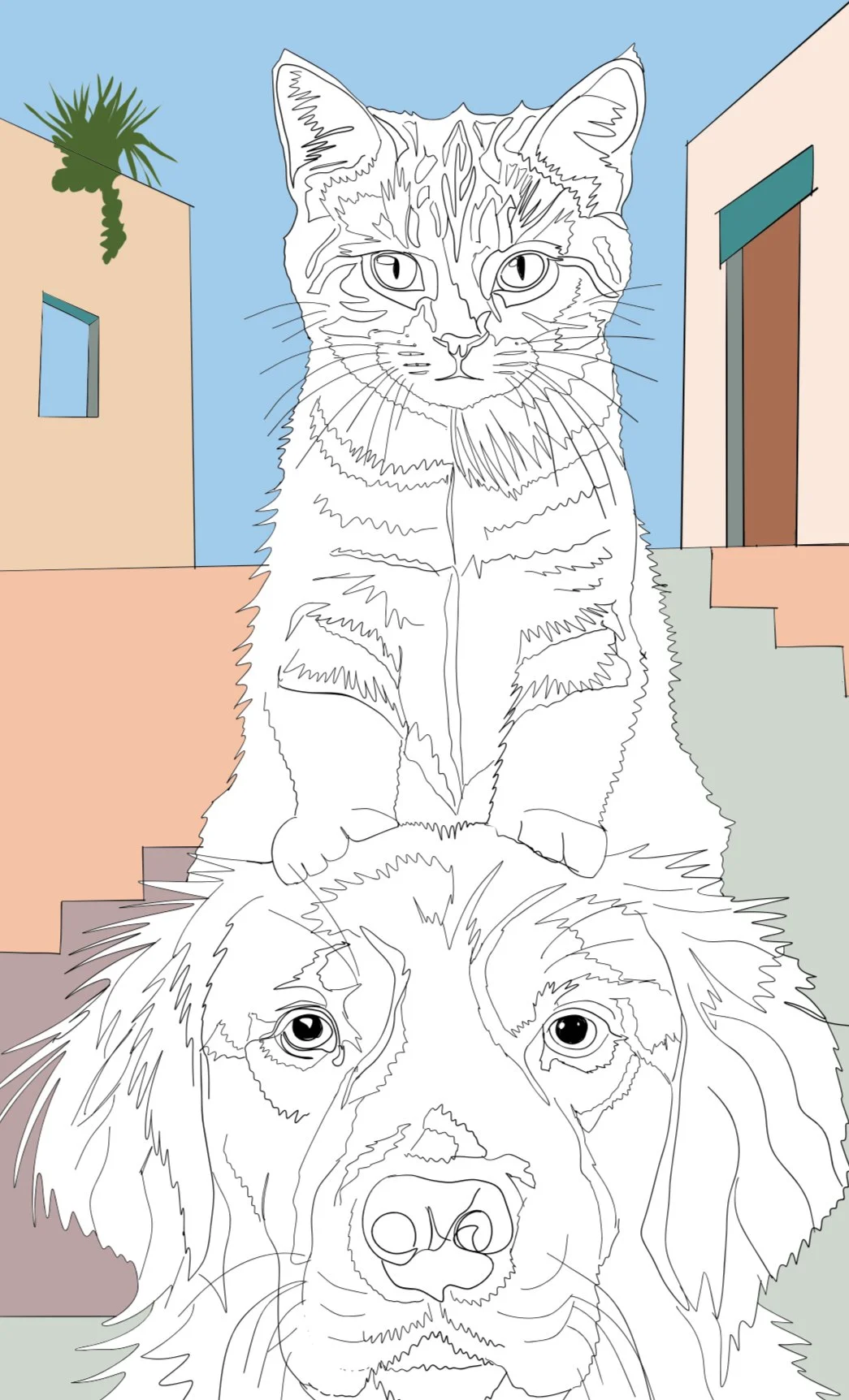
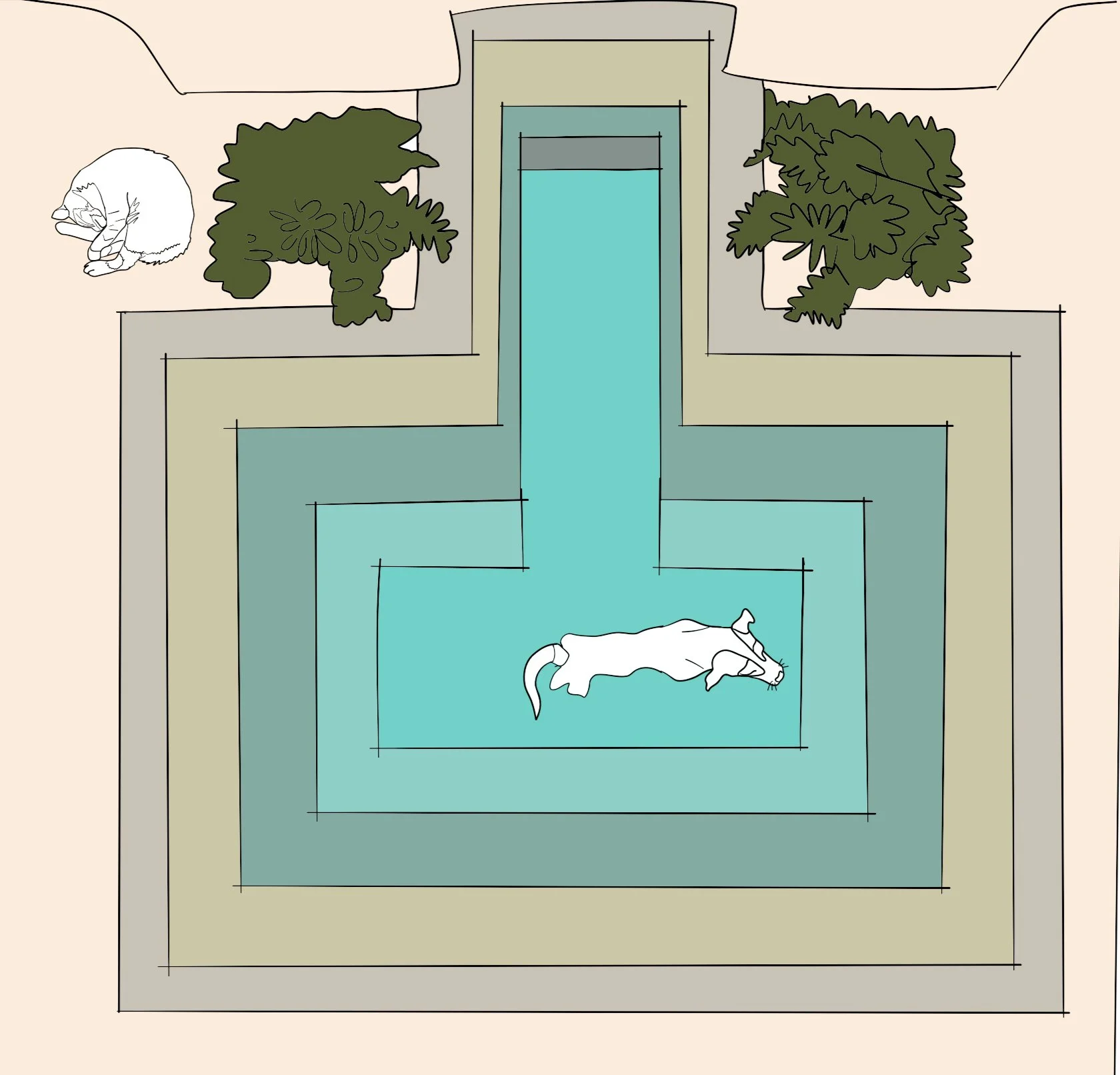
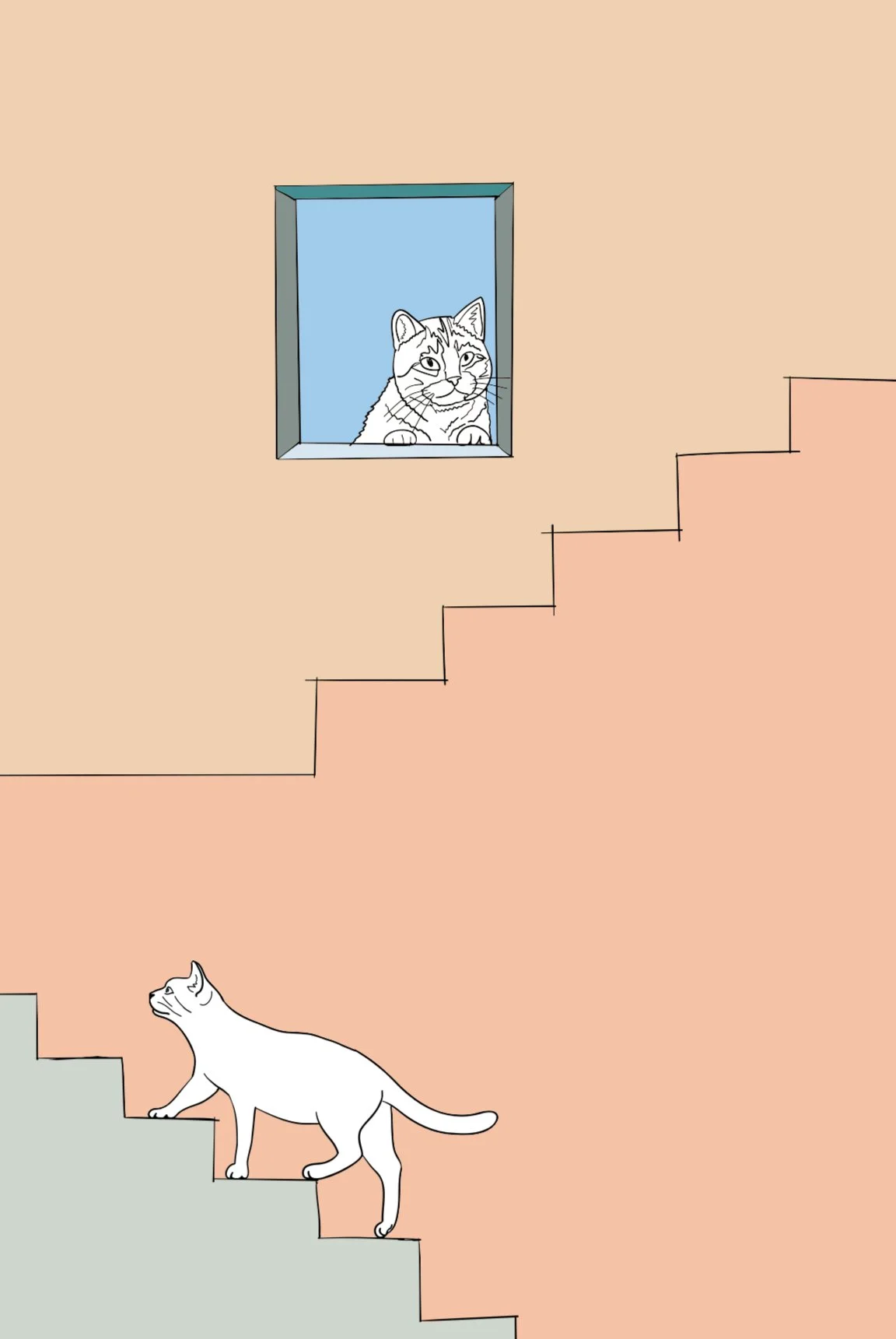
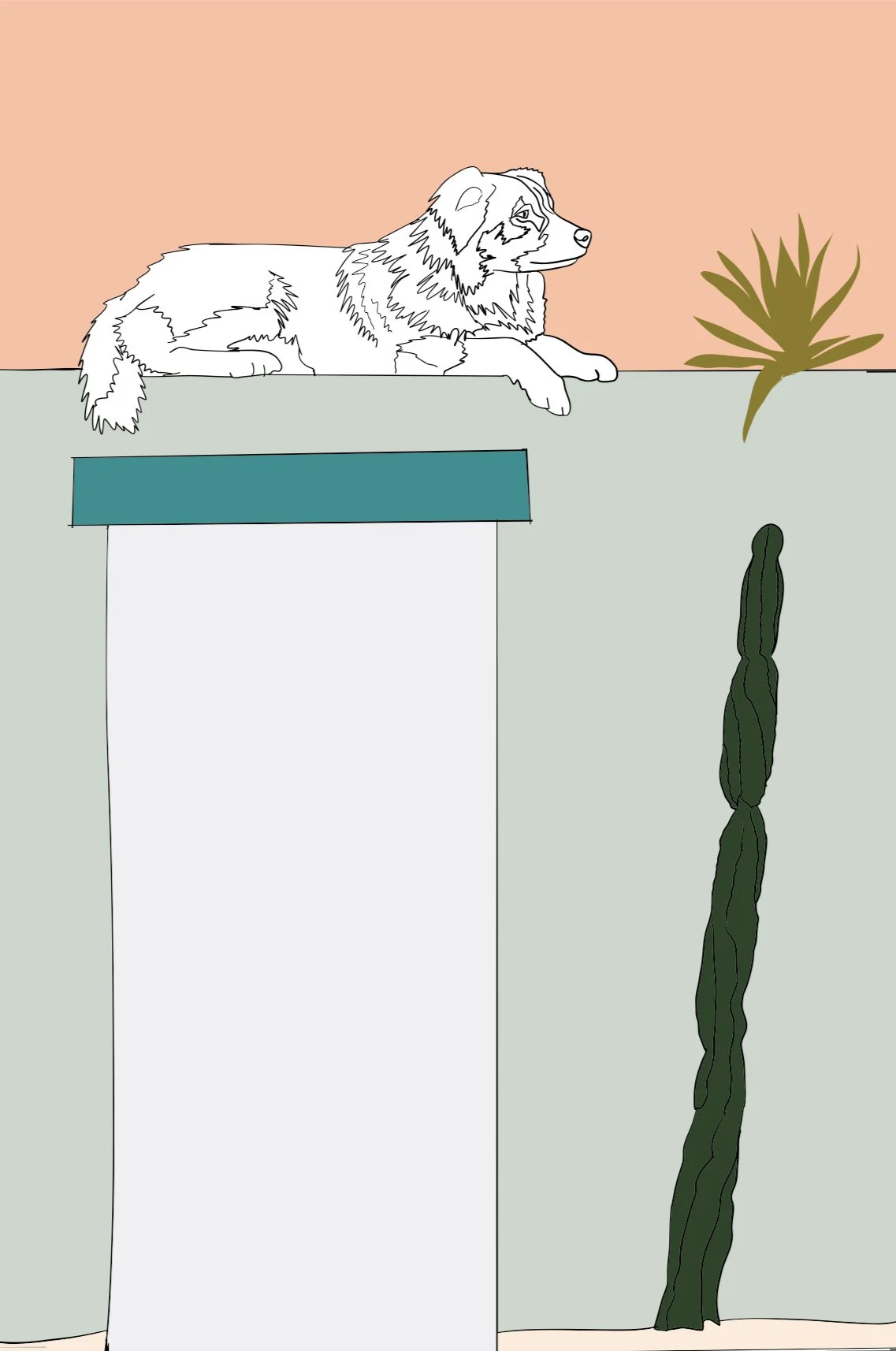
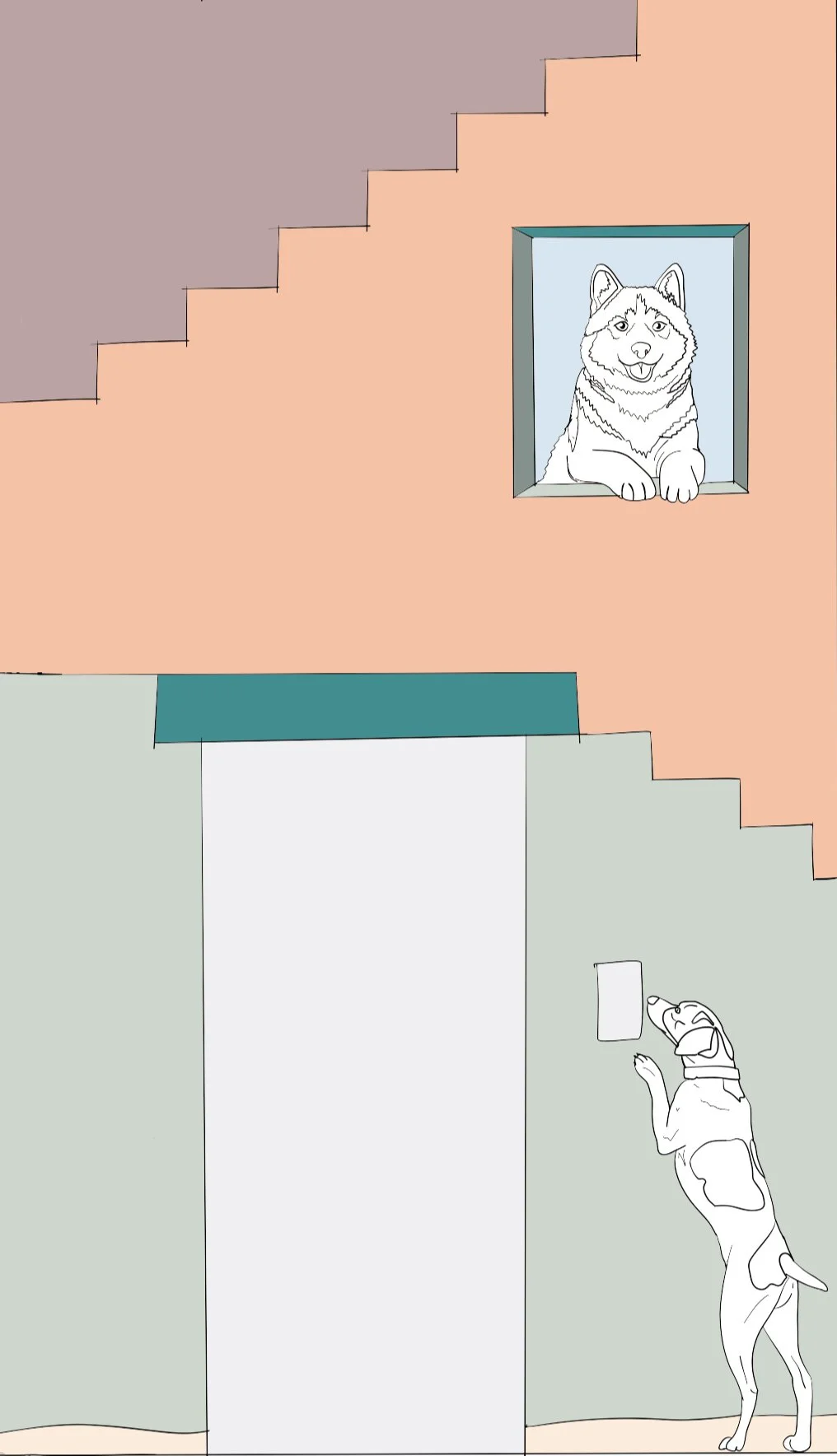
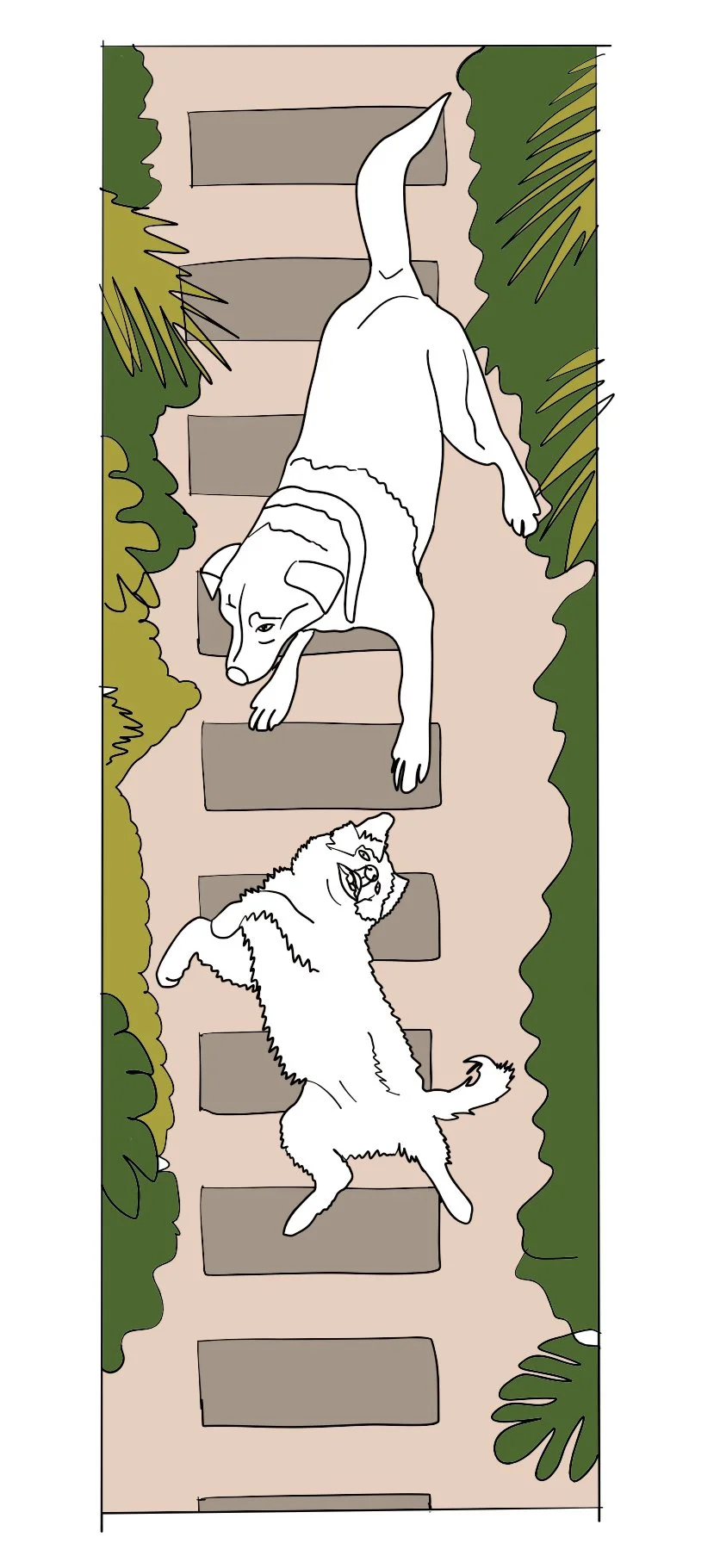
Dogs and cats appear throughout the mural at different scales and moments: climbing, resting, observing, playing, and swimming. These vignettes reflect authentic animal behaviors while maintaining a lighthearted, approachable tone that is engaging for visitors of all ages. Larger central figures—a dog and cat rendered with care and dignity—act as anchors within the composition, reinforcing the individuality and emotional presence of each animal in OCAS’s care.
The architectural geometry of the mural subtly separates and connects spaces, mirroring the programmatic layout of the facility: dogs on the ground level and cats above. Vertical and diagonal elements guide the eye upward, encouraging visitors to explore the second floor while serving as intuitive wayfinding for feline areas. Color fields are soft, optimistic, and calming, chosen to support both human comfort and animal well-being, while remaining visually vibrant and joyful.
This artwork emphasizes visibility and hope—every animal is seen, every path matters. The layered environment reflects Orange County’s diversity and inclusivity, suggesting that many backgrounds, routes, and experiences can converge in one shared destination: home. The mural is designed to feel welcoming, playful, and reassuring, reinforcing OCAS’s mission as an open-admission shelter committed to humane treatment, care, and community connection.
Ultimately, the mural functions as more than decoration—it becomes a storytelling surface that celebrates empathy, invites interaction, reduces stress, and supports the goal at the heart of the facility: let’s get them seen, let’s get them home.
Architectural Inspiration
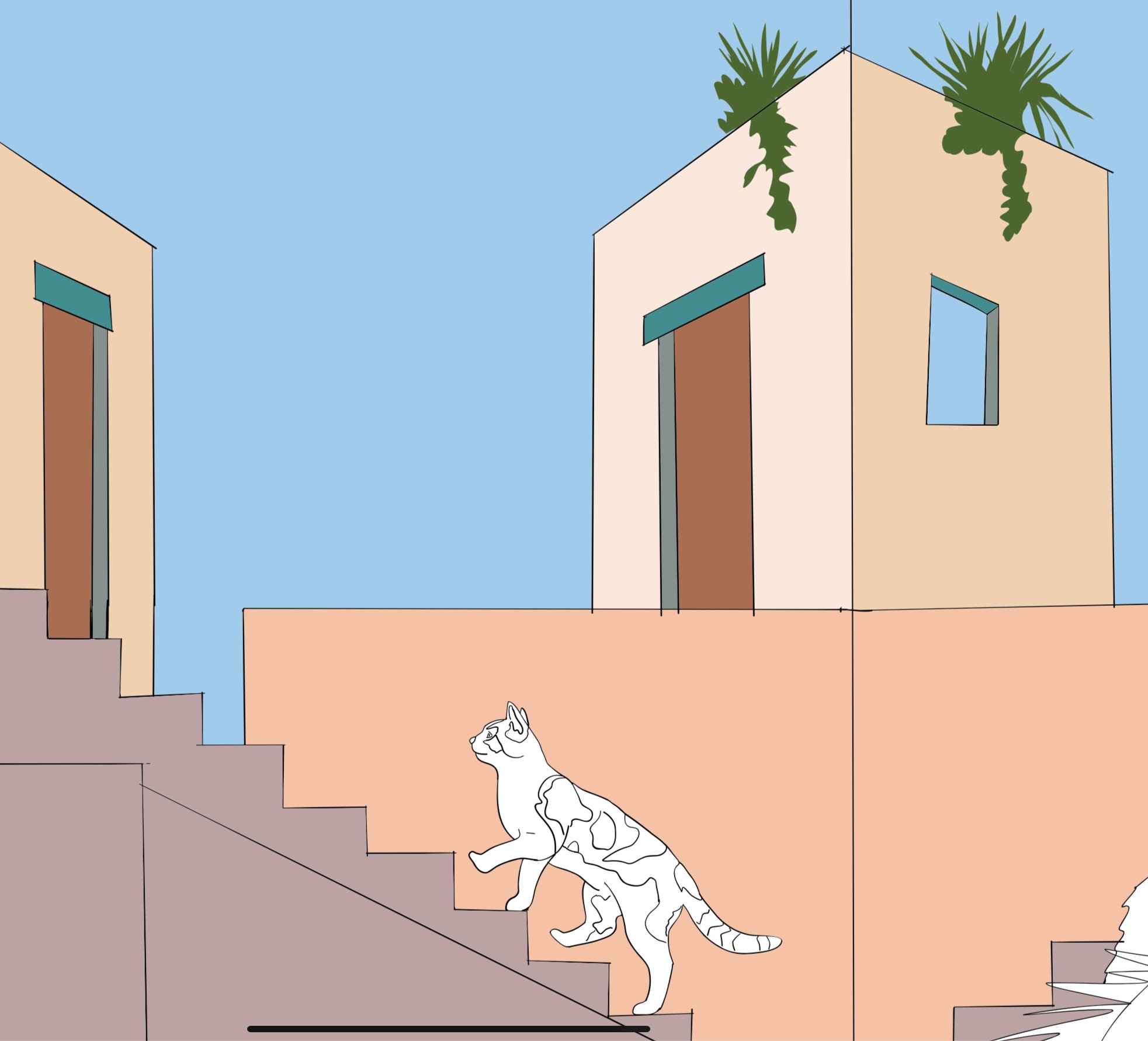
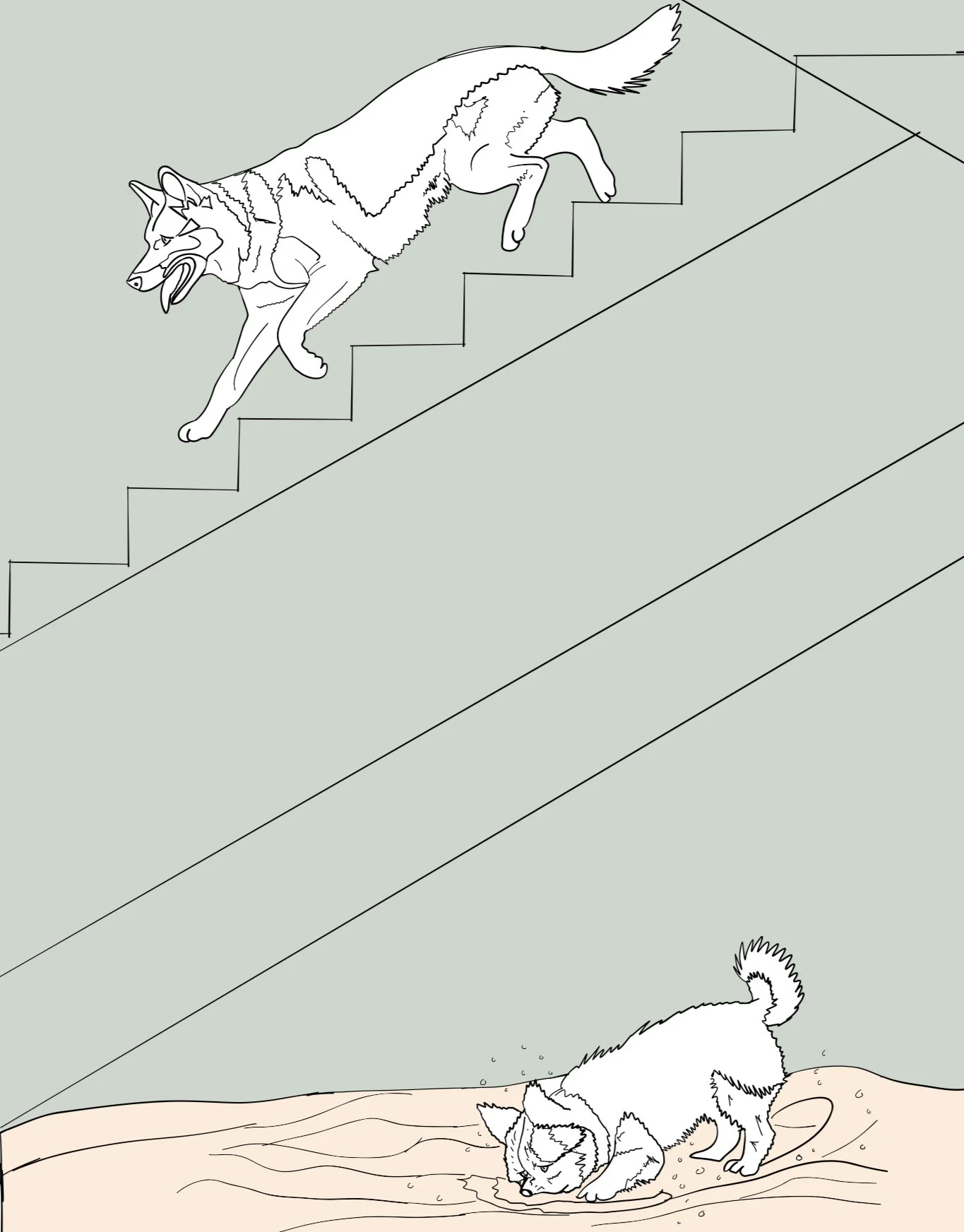
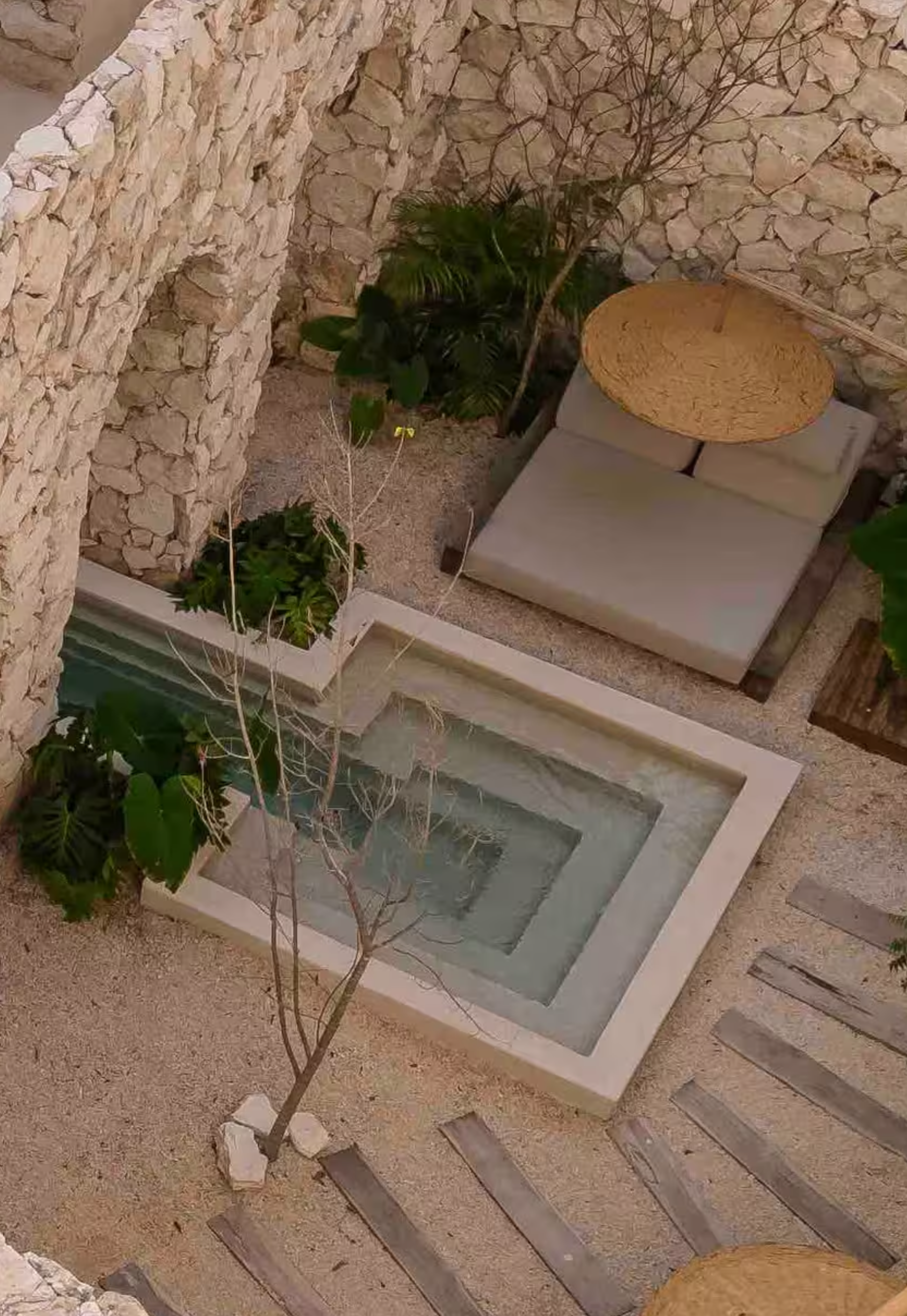
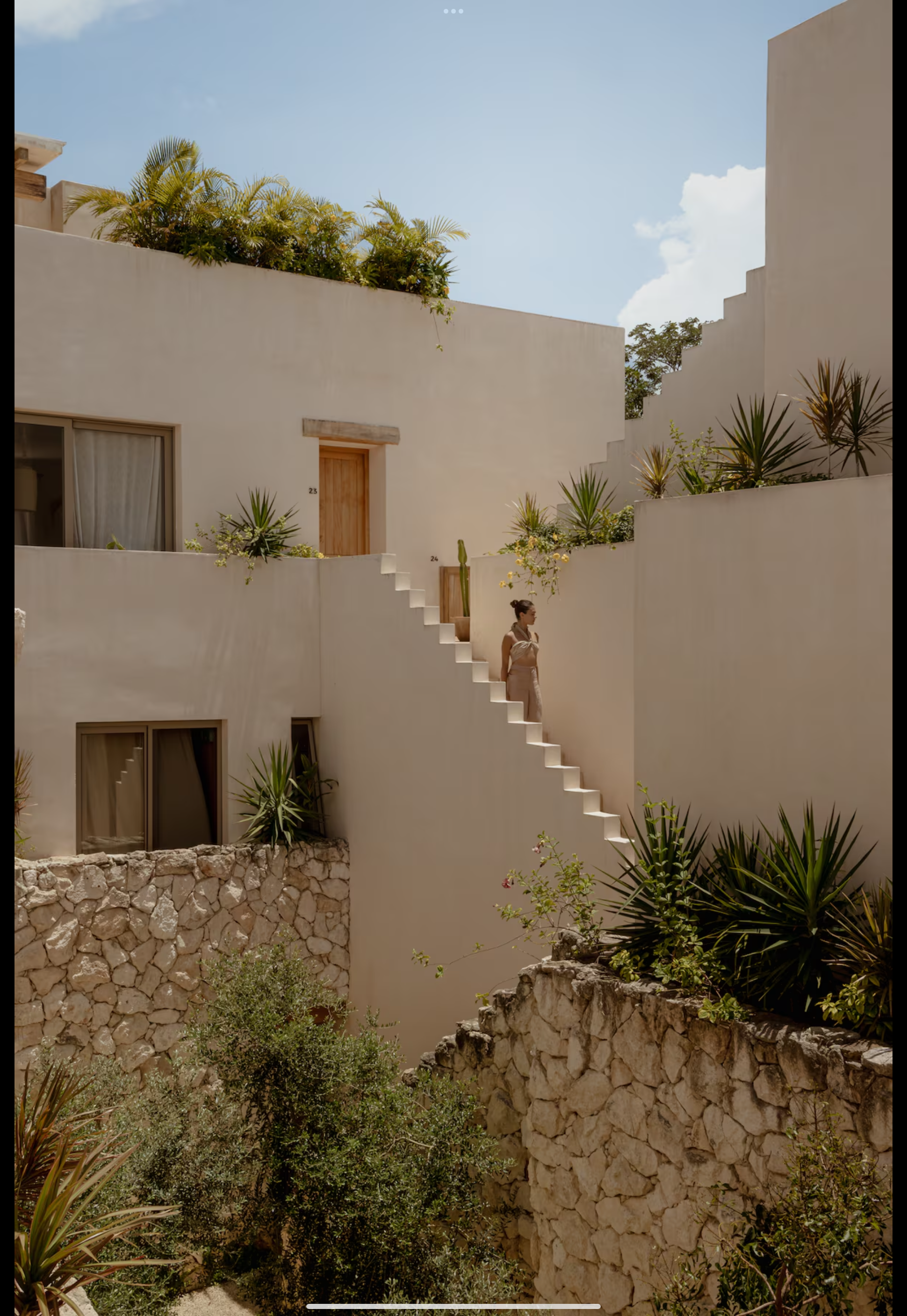
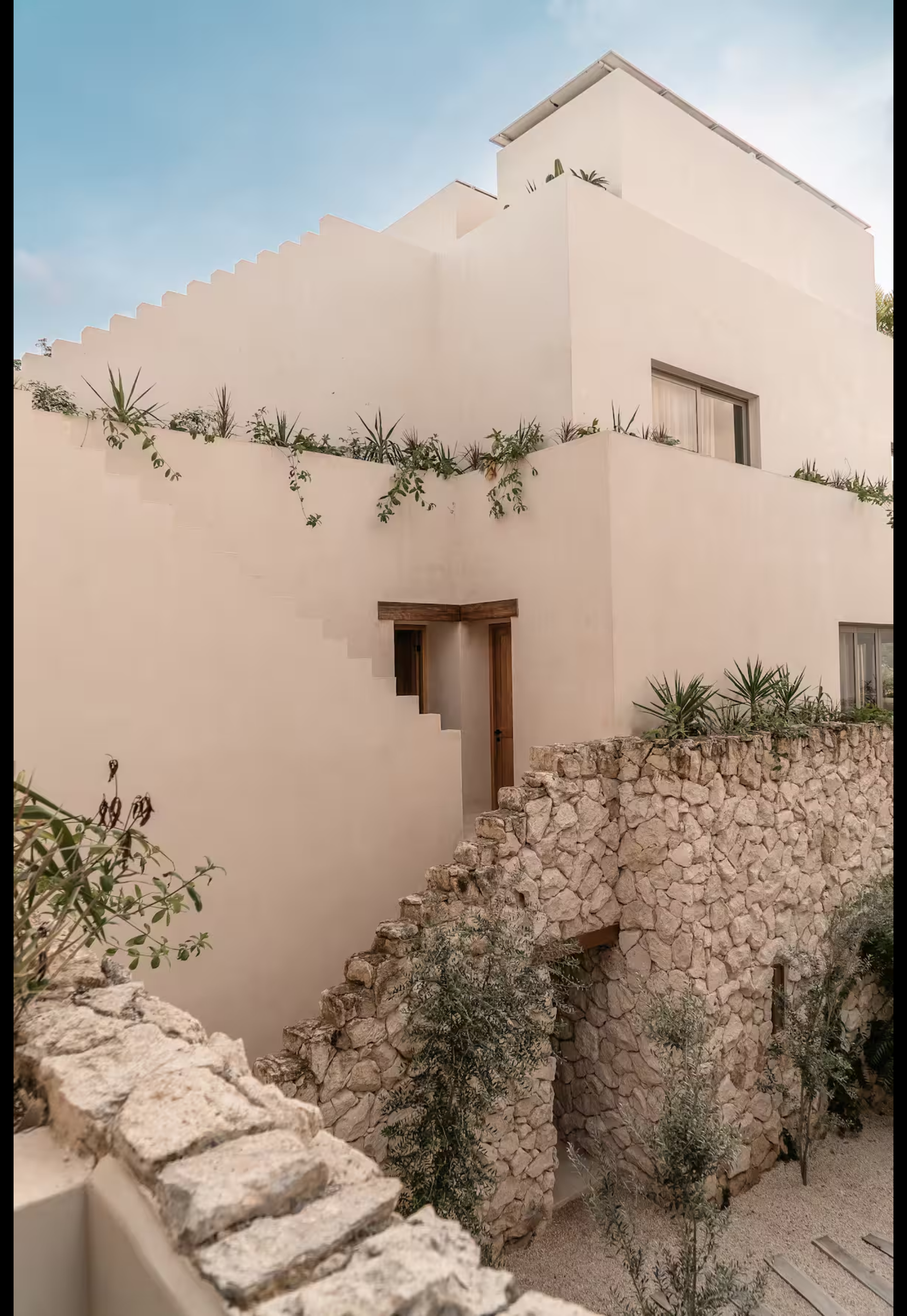
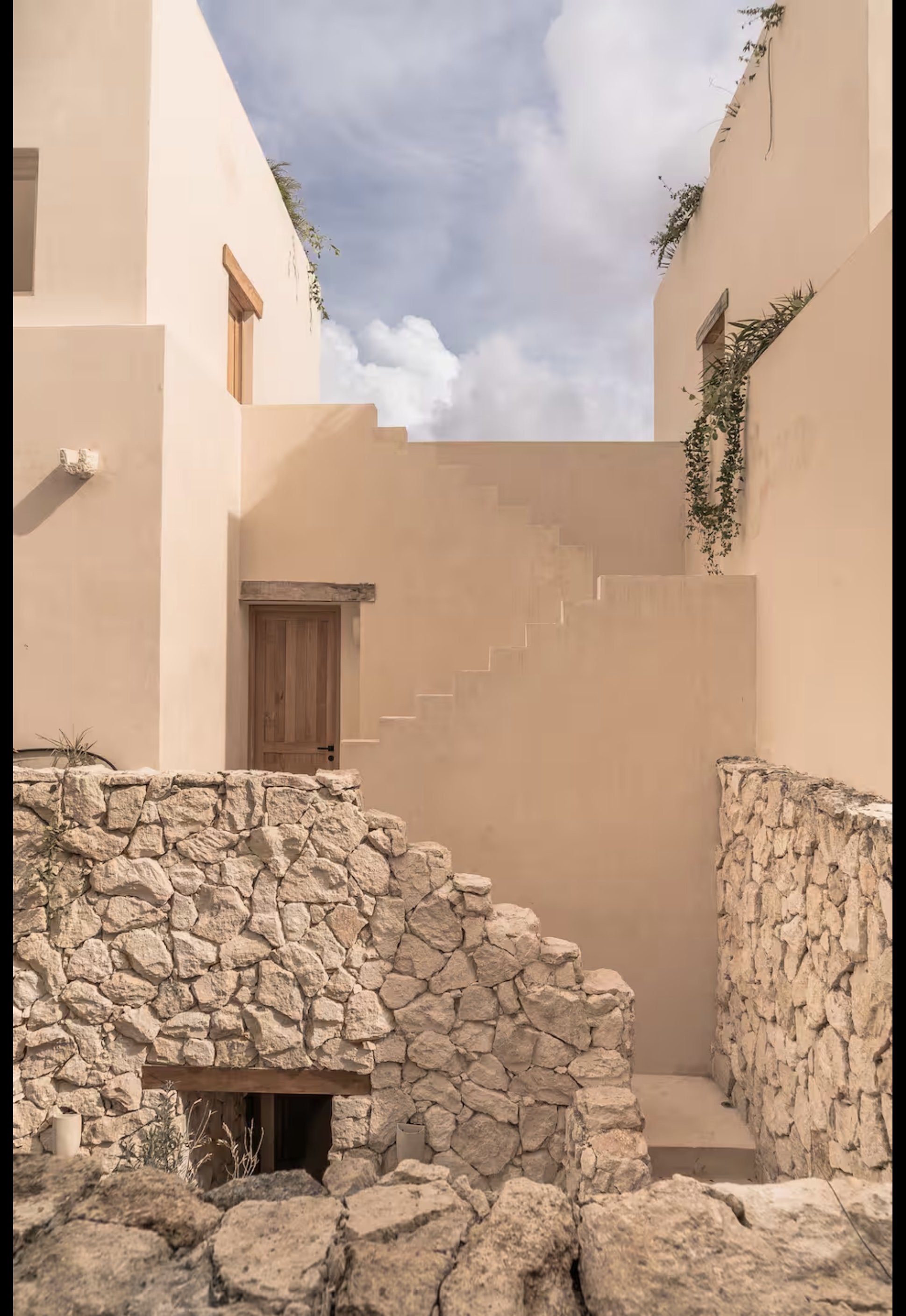
This mural is inspired by the warmth and simplicity of Spanish adobe architecture—its layered planes, softened edges, stairways, and sun-washed surfaces. These architectural forms create a welcoming environment that feels both grounded and playful, offering the animals a built landscape to climb, rest, observe, and explore. The geometry of adobe architecture naturally lends itself to terraces, steps, and thresholds, which become stages for animal movement and interaction throughout the scene.
Within this architectural setting, dogs and cats are shown navigating multiple paths—ascending, pausing, playing, and looking outward. These varied routes symbolize the different journeys each animal takes, while the interconnected design reinforces a shared direction forward. Though the paths may differ, they all lead toward the same outcome: a future home.
The architecture functions as both shelter and narrative framework, reflecting care, protection, and possibility. The scene is intentionally open and inviting, echoing the mission of an open-admission shelter where every animal is welcomed and valued. By merging animal behavior with architectural form, the mural creates a hopeful, humane environment that celebrates movement, choice, and belonging.
This visual language supports a calm, positive atmosphere for visitors of all ages, while reinforcing the idea that within this beautiful, thoughtfully designed space, every animal is seen, supported, and guided toward a new beginning.
Design Process
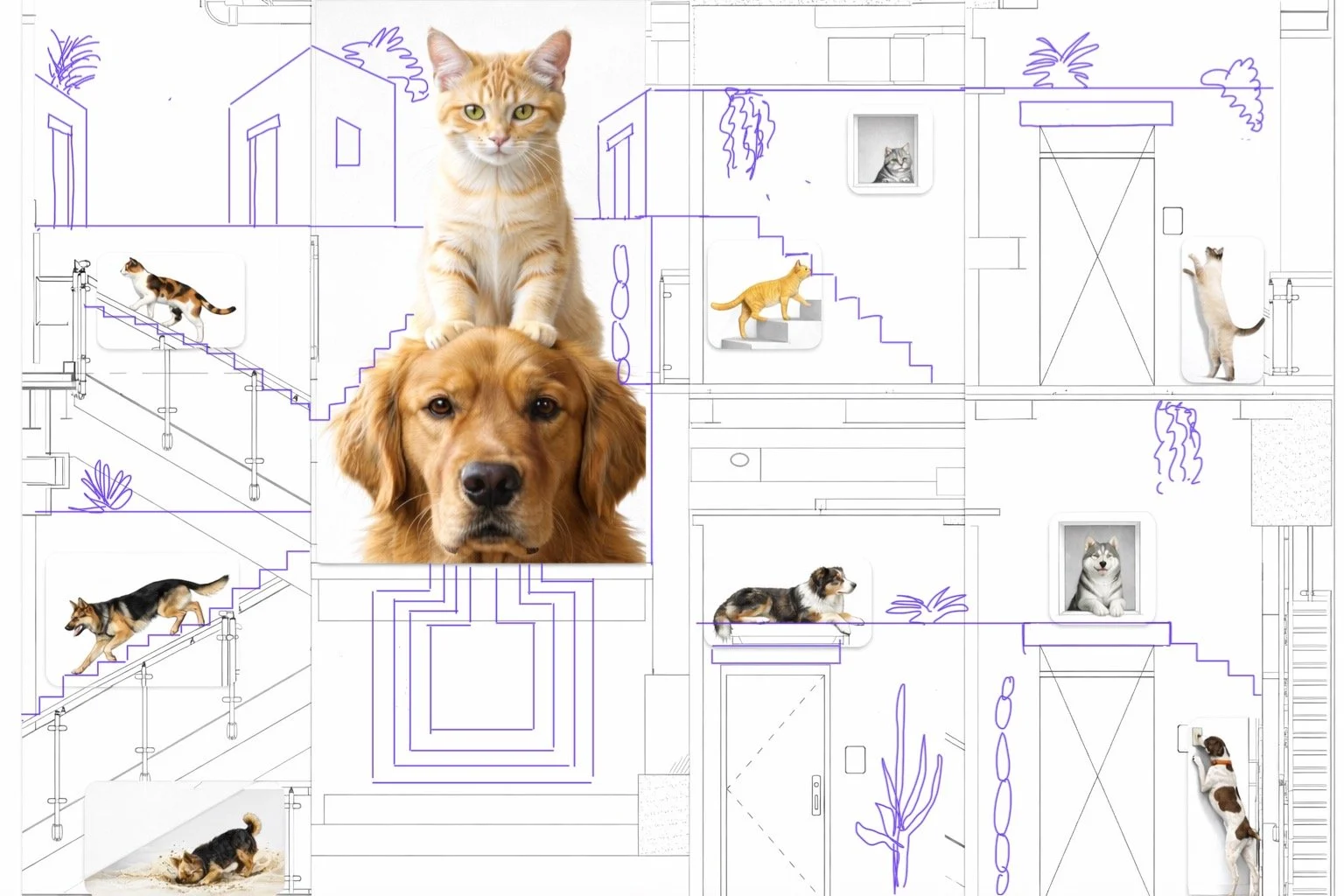
The mural design began with a close study of the architectural elevations of the Orange County Animal Services facility. These elevations served as the structural framework for the artwork. This ensured the mural responds directly to the building’s form, scale, and circulation rather than functioning as an isolated image.
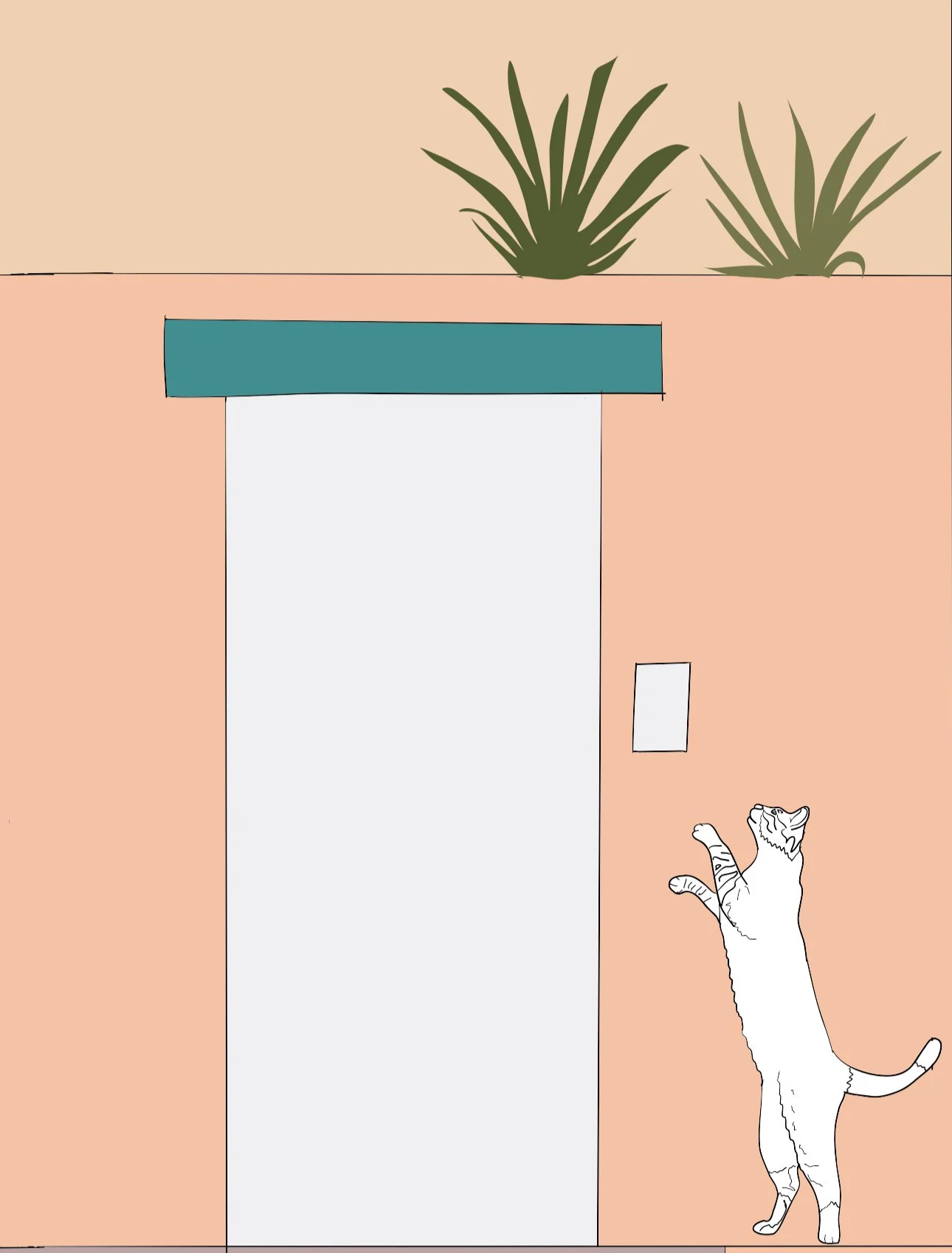
To explore animal movement and behavior within this architectural context, extensive animal reference imagery was used during the early conceptual phase. I studied photographs and observational references of individual animals in expressive, authentic poses that aligned with the program of the space. One example includes a hunting dog poised and alert, pointing toward an elevator button as if it were prey. This reference-driven approach allowed the gestures to feel natural, playful, and narrative-driven while remaining grounded in real animal behavior.
Once key figures were identified, the architectural elevations were aligned side by side and used as a continuous backdrop. Animal imagery was selectively scaled, repositioned, and collaged into the combined elevations to build the overall composition. This phase allowed for testing scale, rhythm, and visual balance across multiple walls and sightlines. It also helped maintain a cohesive flow throughout the space.
After the composition was established, the architecture was redrawn by hand. This ensured precise alignment between walls and how each surface interacts with the next. Stair transitions, openings, and structural breaks were carefully considered. The mural reads cohesively across adjacent surfaces while remaining legible on each individual wall.
Wayfinding was a key component throughout the design process. The placement and movement of animals reinforce the building’s layout. Dogs are visually grounded on the first floor. Cats occupy elevated spaces on the second level. Vertical movement along stairs and ledges naturally guides visitors upward. This intuitively signals where feline areas are located. The result is an artwork that supports navigation while remaining playful, welcoming, and engaging.
This layered process combines architectural analysis, reference-based collage, compositional testing, and hand-drawn refinement. It ensures the final mural is both site-specific and emotionally resonant. The artwork is fully integrated with the building and its mission.
Gilding Animals
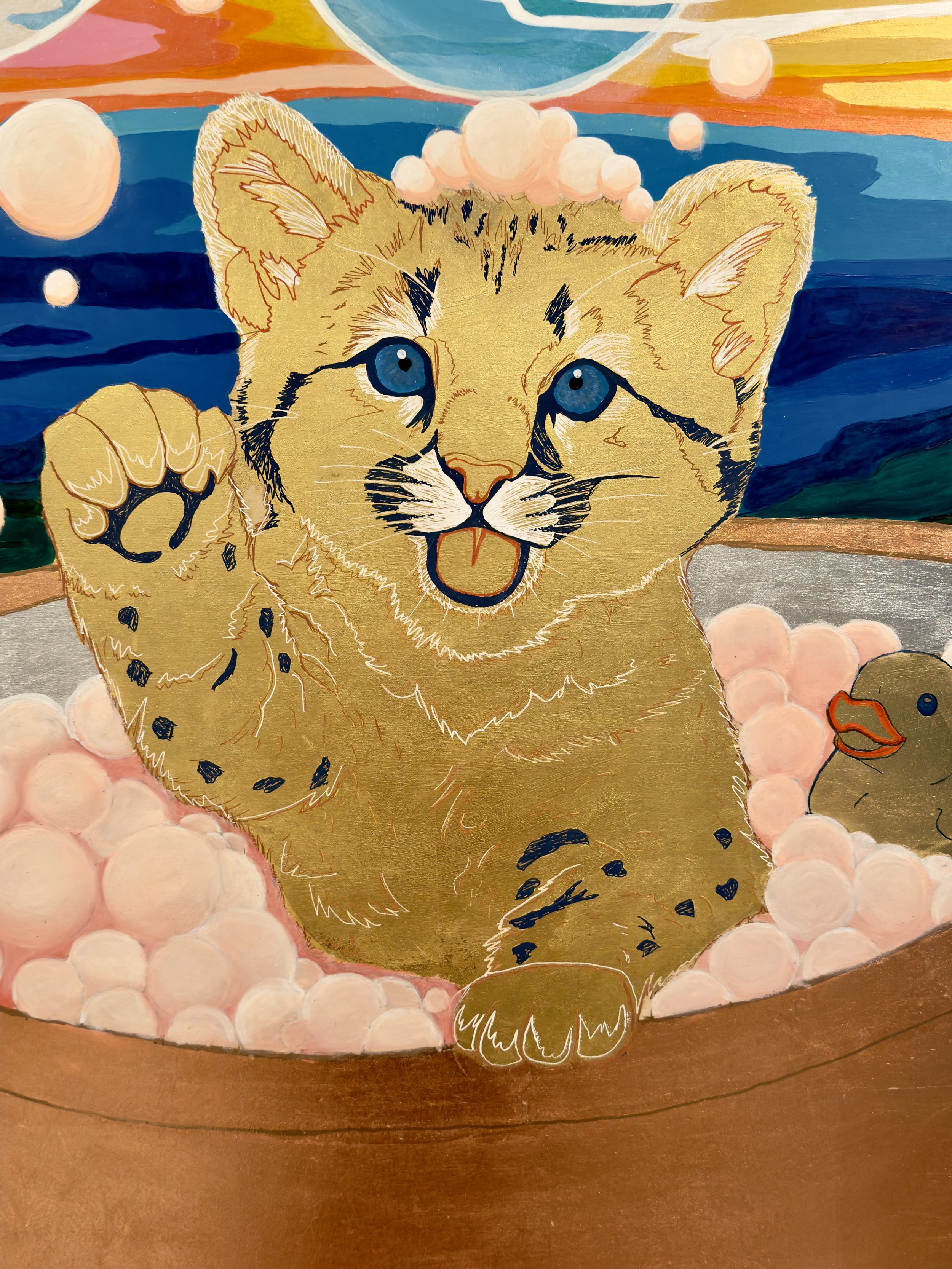
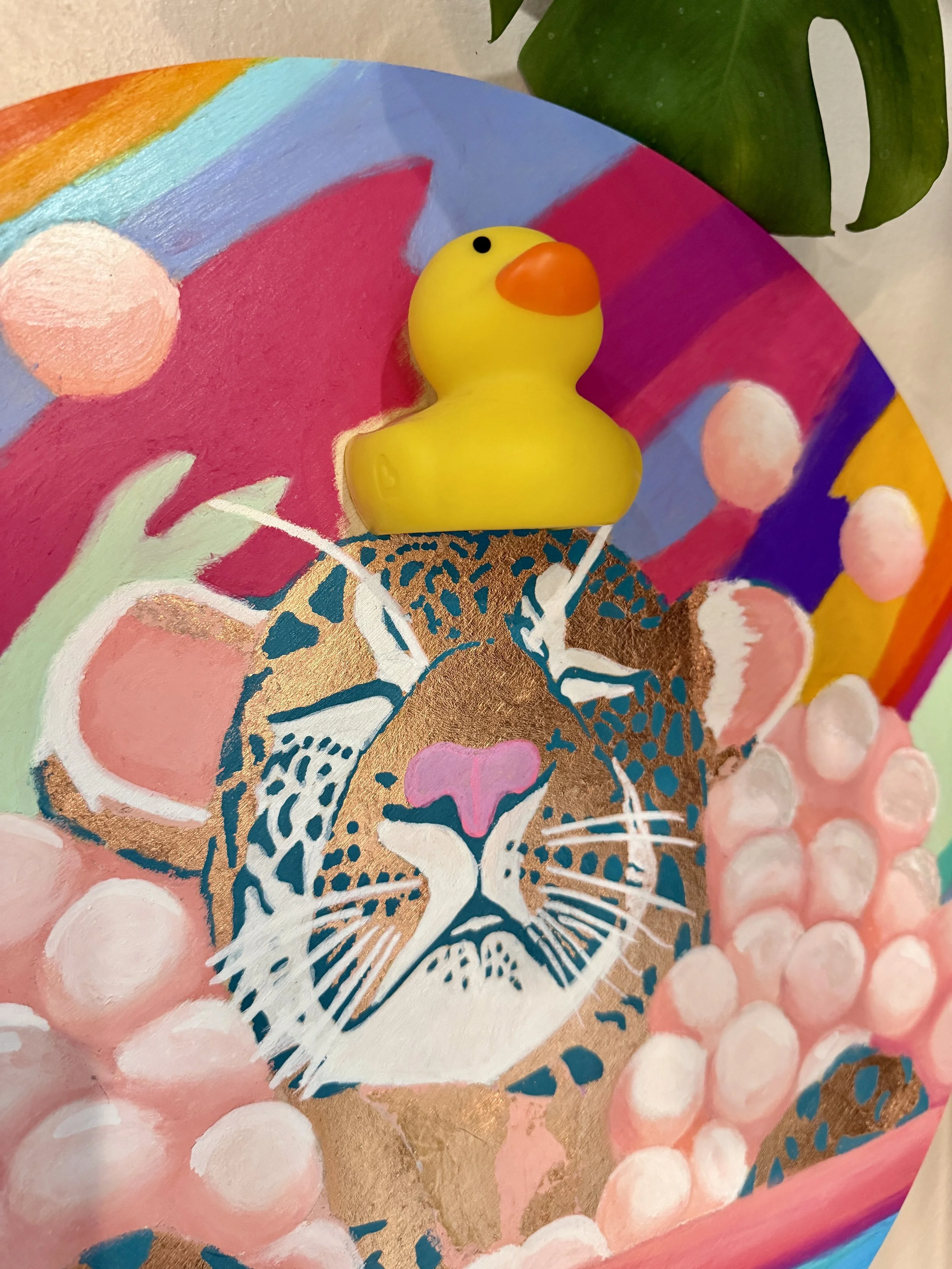
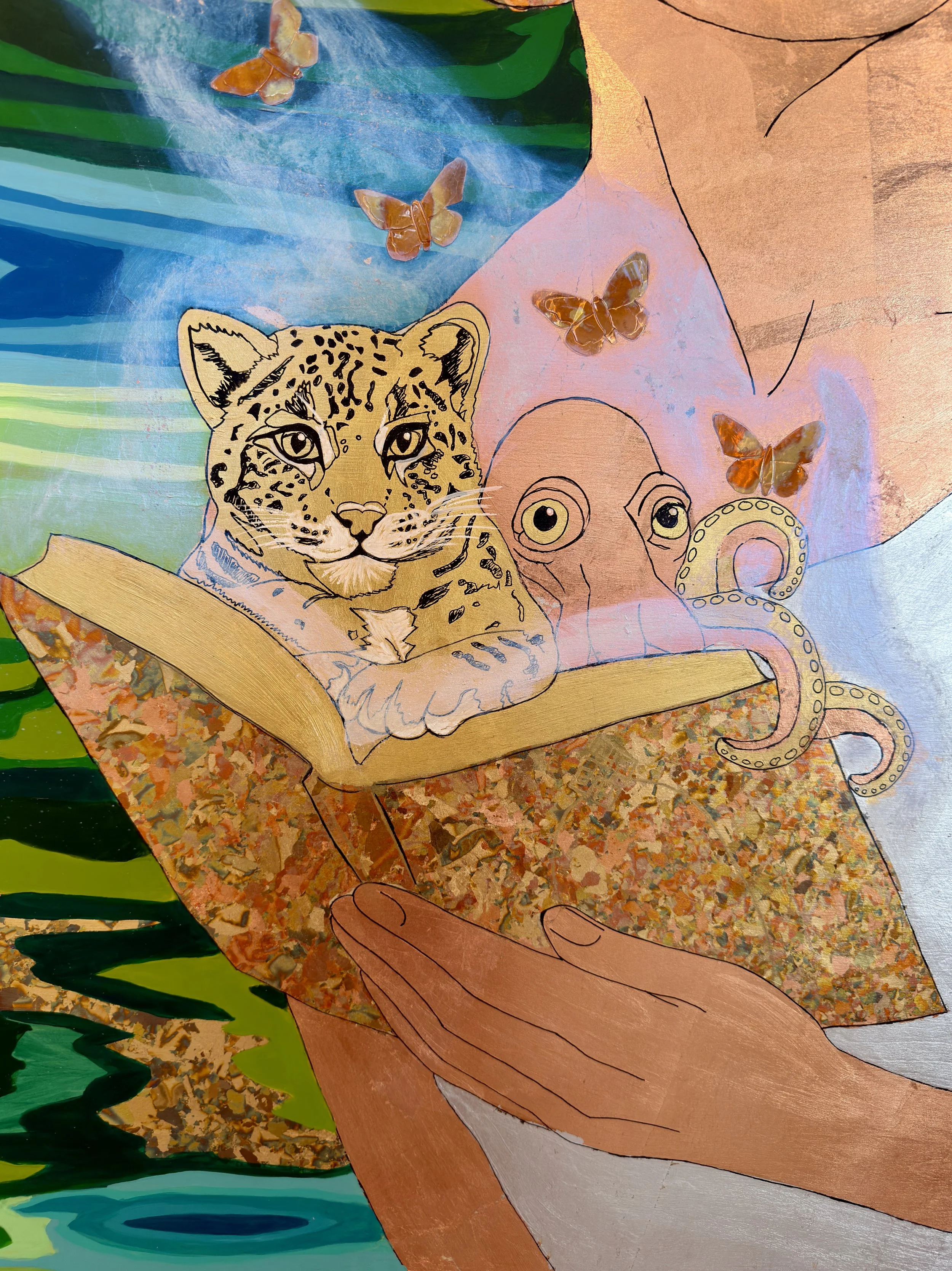
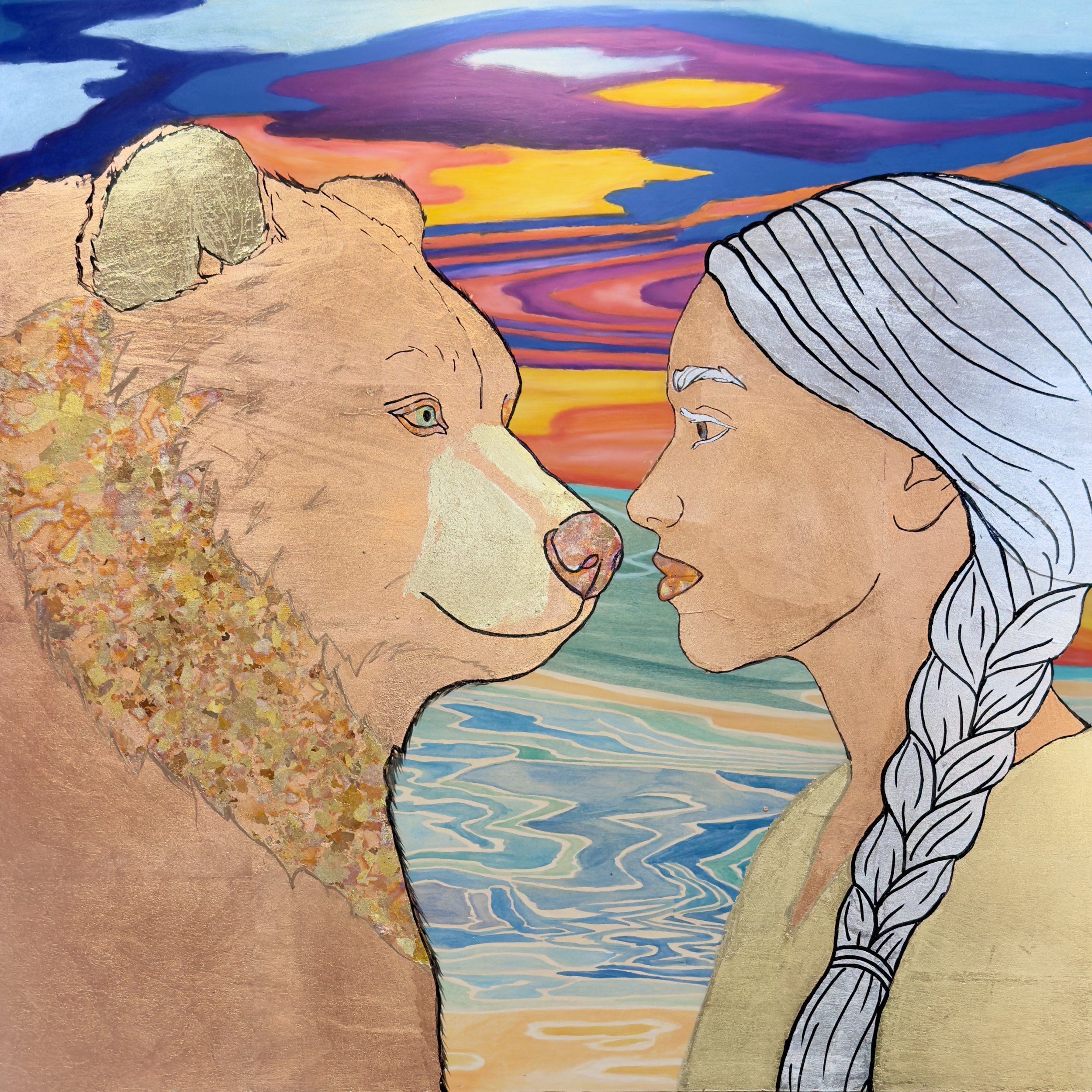
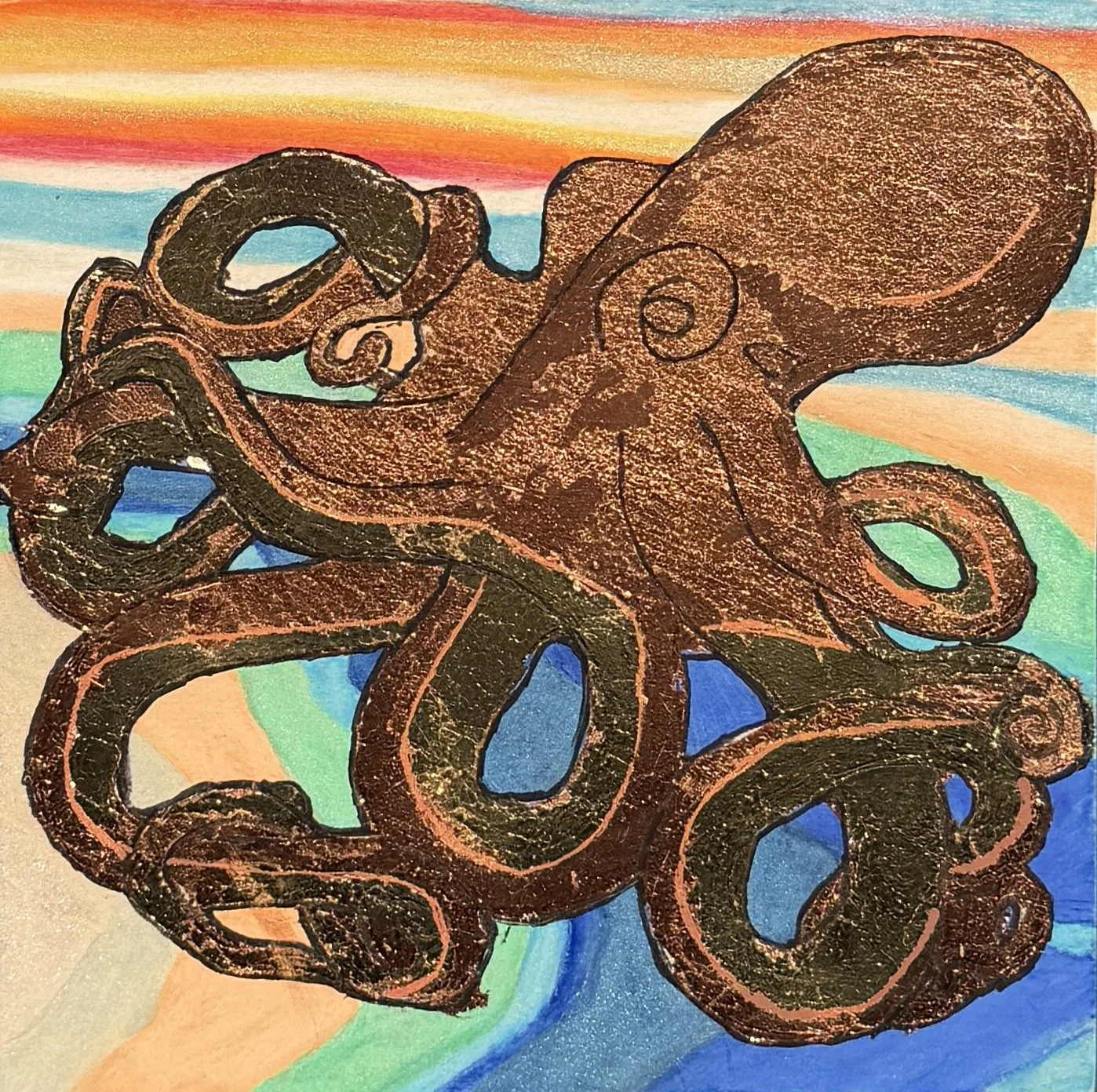
The animals in the proposal rendering are intentionally shown in white to function as a conceptual sketch rather than a finished color study. This allows the focus to remain on composition, movement, and architectural integration, while reserving material expression for the final execution. In the completed mural, each animal would be individually painted using metallic acrylics and hand-applied metal leaf chosen to reflect and honor the natural tones of their coats.
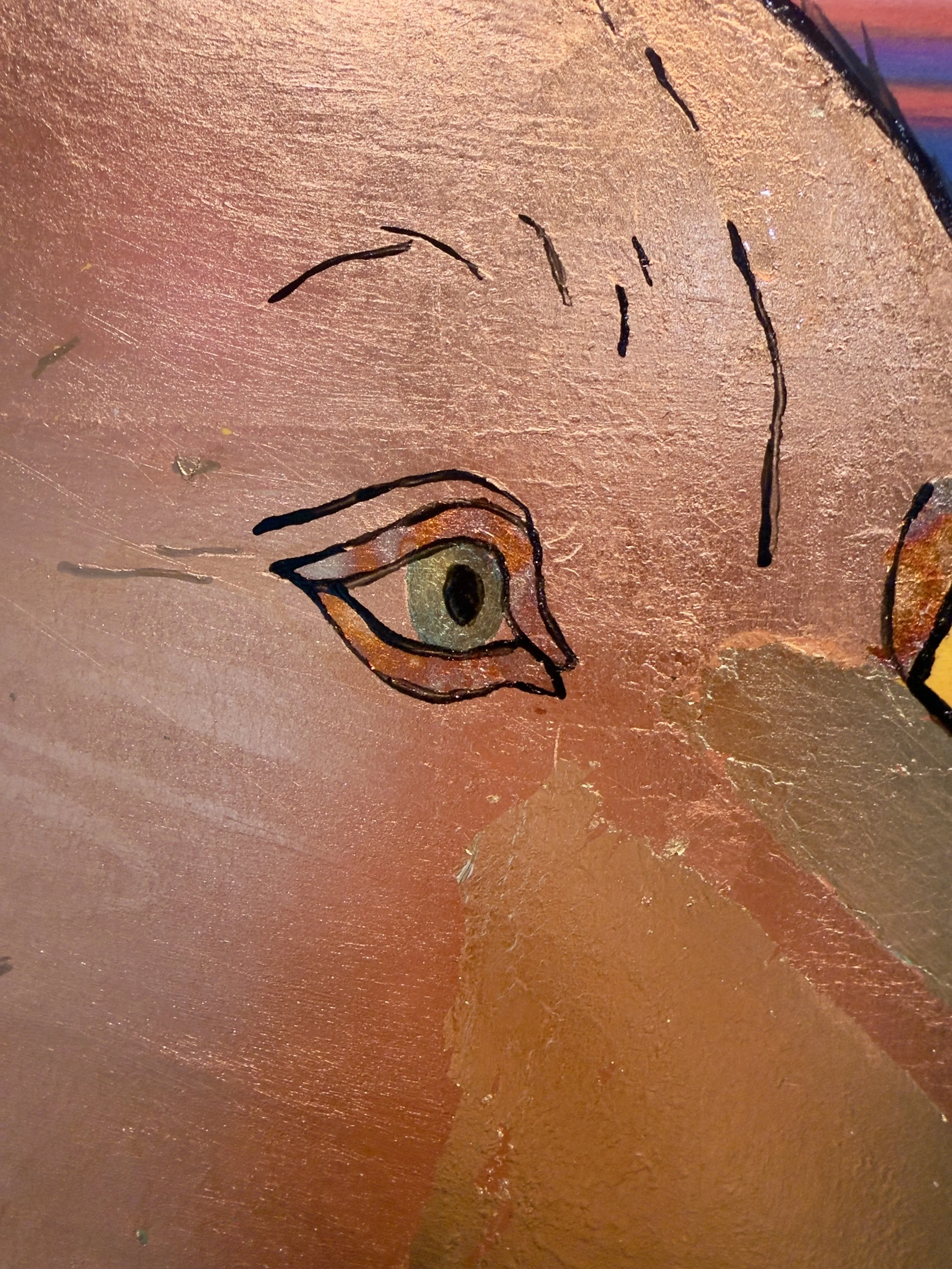
Warm gold leaf would be used for animals such as golden retrievers and yellow cats, while copper leaf would be applied to orange tabbies and German shepherds. Cooler tones, such as silver leaf, would be used for animals like Russian blue cats and huskies. Select focal figures—such as the larger, central cat perched above the dog—would incorporate metallic acrylic as a base, layered with accents of metal leaf to create depth, variation, and durability.
The use of metal leaf introduces a dynamic interaction with light, allowing the animals to subtly shift and glow as visitors move through the space. This reflective quality reinforces the idea of visibility and presence—ensuring each animal is literally and figuratively seen. The materials are chosen not only for their visual richness but for their longevity in a public setting, offering a surface that feels celebratory, hopeful, and engaging without overwhelming the architectural environment.
Together, metallic acrylic and metal leaf elevate the mural beyond illustration, transforming it into a luminous, tactile experience that mirrors the individuality of each animal while contributing to a cohesive, joyful whole.